What Your Olive Oil’s Peppery Kick Says About Healthy Fats
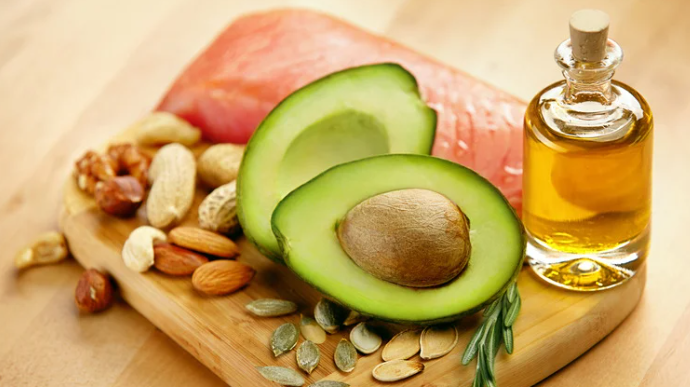
Fats have spent decades being the nutrition world’s most misunderstood macronutrient. In reality, your body needs them, and the type you choose matters. Swapping some saturated fat for unsaturated fats, like those in olive oil, avocados, nuts, seeds and fish, is a long-standing recommendation from the American Heart Association¹.
Olive oil is the star of the healthy-fats conversation, but not every bottle is created equal. The good news? Your throat can actually help you pick a great one.
This guide covers what healthy fats are, how to choose a quality extra virgin olive oil, what polyphenols are and why that peppery sensation matters, and easy ways to add more good fats to your balanced plate to support your F45 workouts.
What are healthy fats?
Healthy fats are mainly unsaturated fats, which include monounsaturated and polyunsaturated fats. They’re found in foods like olives and extra virgin olive oil, avocados, nuts, seeds and fish². The American Heart Association recommends eating foods with these fats in place of foods high in saturated and trans fats¹.
It’s one of the three macronutrients your body relies on, and the goal isn’t to avoid fat. It’s to choose better fat more often.
Why olive oil gets so much attention
Extra virgin olive oil (EVOO) is a staple of Mediterranean-style eating and a go-to source of monounsaturated fat. It also contains polyphenols, naturally occurring plant compounds with antioxidant properties.
In the European Union, olive oil that provides at least 5 mg of hydroxytyrosol and its derivatives per 20 g (roughly 1.5 tablespoons) can carry an authorized claim that its polyphenols contribute to the protection of blood lipids from oxidative stress³.
What are polyphenols, anyway?
Polyphenols are a large family of naturally occurring plant compounds. More than 8,000 have been identified in plants, and several hundred of them turn up in the human diet5. You’ll find them in fruits, vegetables, grains, legumes, herbs and spices, chocolate, tea, coffee and, of course, extra virgin olive oil5.
Polyphenols are best known for their antioxidant activity: they can help neutralize unstable molecules called free radicals, or reactive oxygen species, which contribute to oxidative stress in the body5. That’s a big reason they’re part of the conversation around Mediterranean-style eating. That said, how much of polyphenols’ benefit comes specifically from their antioxidant action is still being worked out5, so it’s best to see them as one perk of a plant-rich diet rather than a cure-all.
Easy ways to get more polyphenols
Variety is the goal. Pair your olive oil with other polyphenol-rich foods5: fruit on yogurt, a cup of tea or coffee, a square of dark chocolate, whole grains and beans, or fresh herbs and spices on just about everything.
Why does good olive oil make your throat tingle?
That peppery kick at the back of your throat comes from oleocanthal, a polyphenol found in fresh extra virgin olive oil, and it’s often a sign the oil is rich in polyphenols.
Researchers confirmed that oleocanthal is the sole compound responsible for the throat irritating sensation of virgin olive oil. When it was added to a non-irritating oil, the sting grew stronger as the dose increased, and it was felt in the throat rather than across the mouth 10. The sensation is similar to the sting some people notice from liquid ibuprofen, a connection first reported in a 2005 paper in the journal Nature 11.
Here’s how to use that to your advantage. Many experts list fruitiness, bitterness and pungency (that peppery feeling) as the positive traits of quality EVOO 12. So rather than avoiding an oil that makes you cough, you can treat the tingle as a flavor cue.
A quick at-home taste test:
- Pour a small amount into a glass or spoon.
- Smell it. Fresh oils often smell grassy, herbal or fruity.
- Take a sip, let it coat your mouth, then swallow.
- Notice whether you feel a peppery catch in your throat a few seconds later.
What Your Olive Oil’s Peppery Kick Says About Healthy Fats
A word of caution: the peppery test is a handy rule of thumb, not a lab result. Polyphenol levels vary with olive variety, harvest timing, processing and storage, so an oil without a kick isn’t automatically unsafe, it just may offer fewer of these compounds. And while oleocanthal acts on some of the same pathways as ibuprofen, olive oil isn’t a substitute for any medication.
Other healthy fats to add to your plate
Olive oil is just one piece. A variety of good fats is the goal.
- Avocado
Avocados and avocado oil are classic sources of monounsaturated fat². Mash onto whole-grain toast, slice over a grain bowl or blend into a smoothie.
- Nuts and seeds
Almonds, cashews, peanuts and hazelnuts, along with flaxseed, hemp and chia seeds, all provide unsaturated fats². Sprinkle over yogurt, stir into oatmeal or keep a small handful on hand as a snack.
- Fatty fish
Fish like salmon provide the omega-3 fats EPA and DHA. Omega-3s (including ALA, EPA and DHA) are found in fish and flaxseed, among other foods, and getting EPA and DHA from food is the only practical way to raise your levels15. The American Heart Association suggests one to two servings of seafood per week to reduce the risk of some heart problems, especially when it replaces less healthy foods15.
- Plant oils beyond olive
Plant oils from fruits, seeds and nuts, like avocado oil, are another way to swap in unsaturated fats for saturated ones².
Easy ways to eat more healthy fats
Adding good fats doesn’t require a major overhaul. Start with one or two swaps:
Breakfast: Add sliced avocado to eggs or toast, or top yogurt with chopped nuts and seeds.
Lunch: Whisk extra virgin olive oil with lemon juice and herbs for a quick dressing (it pairs well with the anti-inflammatory herbs and spices you already love).
Dinner: Roast vegetables with olive oil, or serve salmon alongside greens.
Snacks: Pair fruit with a small portion of nuts, or dip veggies in a drizzle of olive oil and sea salt.
A tip: use your best peppery oil as a finishing touch. Drizzling it over soups, beans, grilled proteins or salads lets you taste (and feel) it at its freshest. Keep in mind that fats are energy dense, so portions matter. If you have risk factors for heart disease, the American Heart Association suggests keeping saturated fat to less than 6% of your total calories².
Bringing it back to the plate
So much of eating well comes down to choosing foods that give your body the best raw materials: quality protein, fiber-rich carbohydrates, and fats that work for you. A peppery, fresh extra virgin olive oil is one delicious, simple way to do it, alongside avocados, nuts, seeds and fatty fish.
No single food is a magic fix, but a varied plate rich in micronutrients and good fats can help you fuel, recover and feel your best.
This article is for general information and isn’t medical advice. Check in with your doctor or a registered dietitian for personalized guidance.
Sources
[1] https://www.heart.org/en/healthy-living/healthy-eating/eat-smart/fats/dietary-fats
[2] https://www.mayoclinic.org/fat/art-20045550
[3] https://pmc.ncbi.nlm.nih.gov/articles/PMC10452016
[4] https://www.cspinet.org/article/good-fats
[5] https://doi.org/10.3389/fphar.2022.806470
[6] https://pmc.ncbi.nlm.nih.gov/articles/PMC6259580/
[7] https://pmc.ncbi.nlm.nih.gov/articles/PMC10360154
[8] https://www.mdpi.com/2076-3921/9/1/77
[9] https://hdl.handle.net/10481/83060
[10] https://pmc.ncbi.nlm.nih.gov/articles/PMC4139846
[11] https://doi.org/10.1038/437045a
[12] https://www.ucdavis.edu/magazine/how-to-choose-the-best-olive-oil
[13] https://www.universityofcalifornia.edu/sites/default/files/olive-oil-tips.pdf
[14] https://link.ucop.edu/?p=66448
[15] https://ods.od.nih.gov/factsheets/omega3fattyacids-consumer/
Written and published by F45 Training HQ, and reposted here for the F45 North Paramus community.
Keep reading

Estrogen and Women’s Health: What Your Hormones Are Trying to Tell You
Your sleep is off, your recovery is dragging, and workouts that used to feel great now feel a little flat. This month, F45 | Joi + Blokes is unpacking a questio
Read the article →
What is F45 Games Day? Format, Stations & Smart Ring Prep Tips
F45 Games Day is a 60-minute, points-based team workout where you and your teammates take on nine stations to rack up the highest shared score in the room. It’s
Read the article →
Weekly Tips for Athlete Track: Week 4
Welcome to Week 4 of the Athlete Track! You’ve built repeatable output and learned when to push and when to hold back. Now it’s time to put more intent behind y
Read the article →