What are the Best Shoes for F45 Workouts? Meet the Reebok Nano X5 Edge: F45 Training Edition
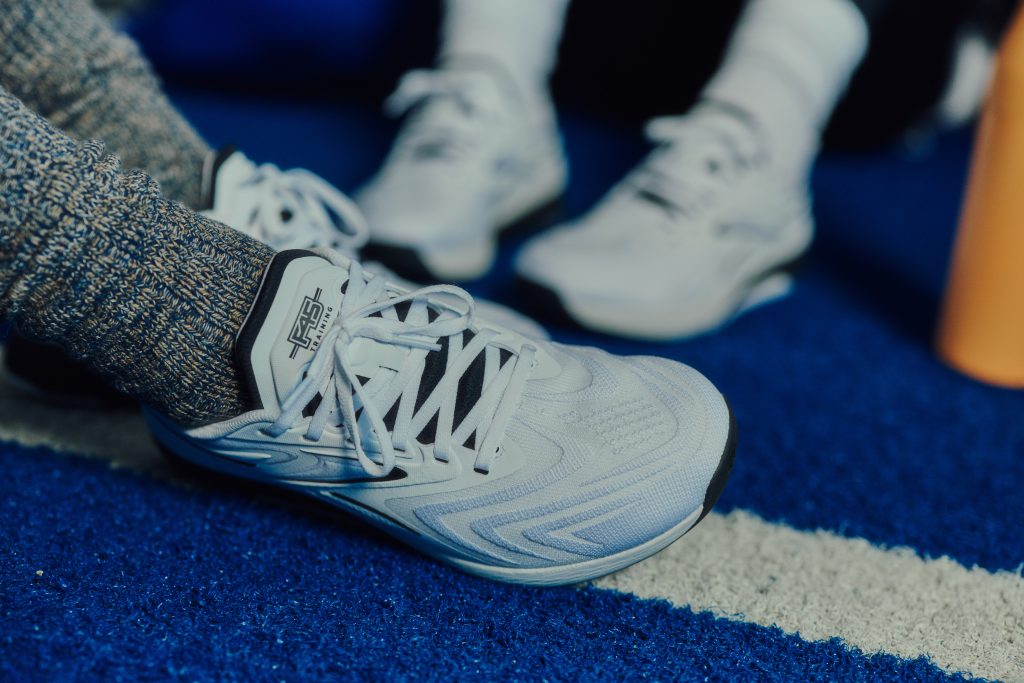
Are your training shoes keeping up with the way you move?
The best shoes for HIIT support stability, absorb impact, and help you stay in control.
In F45, that demand is constant. Cardio, resistance, and hybrid workouts push you through sprinting, lifting, and rapid transitions in a single session – so the best shoes for F45 need to handle it all, without compromising support for your feet.
That’s why we’ve partnered with Reebok as our official global fitness partner, introducing co-designed training gear built for the F45 athlete. Within this range, the Reebok Nano X5 Edge: F45 Training Edition is a shoe specifically designed to handle the intensity of F45 – supporting you across every station, every round, and every rep.
Below, discover how to find the best shoes for F45 training – and choose a pair that works with the way you move.
Why F45 requires a specific type of shoe
F45 brings group fitness and varied training together, with each session challenging your body in a different way.
Below, we break down our workouts and what to look for when choosing the best shoe for F45.
Cardio workouts
Our cardio workouts are designed to improve running endurance and cardiovascular fitness through high-impact, fast-paced movements – including sprinting, jumping, and agility drills that require quick direction changes.
For this style of training, the best shoes for HIIT need cushioning and responsiveness. Cushioning helps absorb impact during repeated landings, while responsiveness allows you to push off quickly and change direction with control.
Resistance workouts
Our resistance workouts focus on building and maintaining muscle through functional movements – think squats, lifts, and progressive overload that build your strength over time.
In weight training, control starts from the ground up. As F45 trainer and athlete Ril Anibaba explains, “the best shoes for F45 resistance training need to be firm, with the right ankle support. If your base isn’t stable, everything above it has to compensate. A stable shoe keeps you grounded so you can focus on the movement.”
Hybrid workouts
Hybrid workouts bring everything together – combining cardio and resistance training in one fast-paced session. You move from sprinting to lifting to agility work with little time to reset, constantly switching how your body performs.
That means your shoes need to cover all bases. The best shoes for F45 hybrid training balance cushioning for high-impact movement with the grip and stability required to stay controlled through lifts and transitions.
Why the Reebok Nano stands out
The Reebok Nano X5 Edge reflects what the best shoe for F45 training should deliver – the ability to handle different movements without breaking flow.
Designed with functional training in mind, the Reebok Nano X5 Edge has a range of targeted features in its locker, each created to support different phases of your workout.
- DualResponse EVA midsole: cushions the front to absorb impact and drive push-off during runs and jumps, with a firmer heel that anchors you through lifts and loaded movements.
- Decoupled Metasplit outsole: lets your foot flex and roll naturally, with a split sole design that creates seamless transitions as you change direction.
- Grip underfoot: offers increased traction to keep you controlled through lateral cuts, pivots, and fast station changes.
- Performance Comfort Collar: provides a secure, locked-in feel with ankle padding that holds your foot steady through every rep.
- FlexWeave mesh: flexes with your movement while resisting friction, enabling your feet to stay cool and unrestricted during an F45 workout.
Want to learn more about the best shoes for HIIT training? Explore the F45 Training | Reebok collection – designed to keep up with every workout.
5 strategies to find the right training shoe for you
With the mix of training types and movements you’ll experience at F45, you need a shoe that will provide stability, offer an appropriate level of cushioning, and – most importantly – help you smash your workout goals.
Below, discover what defines the best shoes for F45 training – and where the Nano X5 Edge stands out.
1. Find the right heel-to-toe drop
Your heel-to-toe drop is the height difference between your heel and toe area. A higher drop means your heel sits slightly elevated, while a lower drop keeps your foot flat.
The difference is:
- Higher drop (around 8mm) – reduces strain on the Achilles tendon, calf muscles, and arches to help prevent injury during exercise.
- Lower drop (0mm) – keeps your foot closer to the ground for a more natural feel.
With a moderate drop of around 7mm, the Reebok Nano X5 Edge balances stability for lifts with freedom of movement for HIIT. You get a solid base when you’re under load, without losing that natural feel as you move between exercises.
2. Make sure there’s enough space for your toes
As you train, your foot naturally widens – especially during fast, multi-directional movement.
That’s why it’s vital that the front of your training shoe – the area known as the toe box – gives your toes room to move, without putting pressure on that part of your foot. The best shoes for F45 training build in space through the forefoot, so your toes aren’t pushed together as intensity increases.
The Reebok Nano X5 Edge achieves this with its FlexWeave – a breathable mesh that stretches as your foot widens. This creates extra room in the toe box during movement, so your toes can spread without feeling restricted.
3. Consider your age and fitness
As you age, your feet naturally change. Your feet can widen, your arches can flatten, and you can lose some of the soft tissue under your foot that supports you.
If you’re exploring how to customize and plan workouts after 60, the best shoes for F45 should provide added cushioning, arch support, and a more accommodating fit. The Reebok Nano X5 Edge responds to these needs with a firm heel and cushioned forefoot that absorb impact, helping reduce pressure on your joints as you move.
4. Measure your foot length
You can have the best shoes for HIIT training in the world, but if they don’t fit your foot, they won’t support your movement. A poor fit can cause rubbing and shift how your body moves.
“We spend countless hours perfecting every detail of a training shoe, but none of those innovations matter if the fit isn’t right. Proper foot length measurement helps unlock the stability, support, and comfort the shoe was designed to deliver.” -Tal Short, Director, Reebok Training Footwear
For measurement, you’ll need:
- a piece of paper
- a pen or pencil
- a ruler or measuring tape
- a wall or flat surface.
To measure your feet:
- Place a piece of paper flat on the floor, next to the wall.
- Stand up with your foot flat on the paper, making sure your heel is touching the wall.
- Take your pen (or pencil) and trace the outline of your foot. For an accurate outline, hold the pen straight up as you draw.
- Take your ruler and measure the distance between your heel and the end of your big toe or second toe (whichever is longer).
- Repeat the process with your other foot.
If you find that one foot is longer than the other, the longer foot length is the measurement you should use to determine your true shoe size.
5. Use orthotics (if needed)
Orthotics (or shoe inserts) can improve workout performance – and their injury prevention benefits can help you build a sustainable fitness routine.
They sit inside your shoe to guide how your foot moves and distribute pressure more evenly. This can reduce strain, limit excessive foot rolling, and help reduce back pain during a workout by improving how force moves through your body.
Ready to take on every station with confidence? Shop the Reebok Nano X5 Edge – and the entire range of F45 Training x Reebok apparel – to power your next workout.
Written and published by F45 Training HQ, and reposted here for the F45 North Paramus community.
Keep reading

Weekly Tips for Athlete Track: Week 4
Welcome to Week 4 of the Athlete Track! You’ve built repeatable output and learned when to push and when to hold back. Now it’s time to put more intent behind y
Read the article →
Weekly Tips for Lean Track: Week 4
Welcome to Week 4 of the Lean Track! You’ve found a pace you can repeat and held it steady. Now it’s time to build on it with small, sustainable progressions. A
Read the article →
Weekly Tips for Power Track: Week 4
POWER TRACK Welcome to Week 4 of the Power Track! You’re past the halfway point. You’ve built your loads and sharpened your form, so now it’s time to start prog
Read the article →